
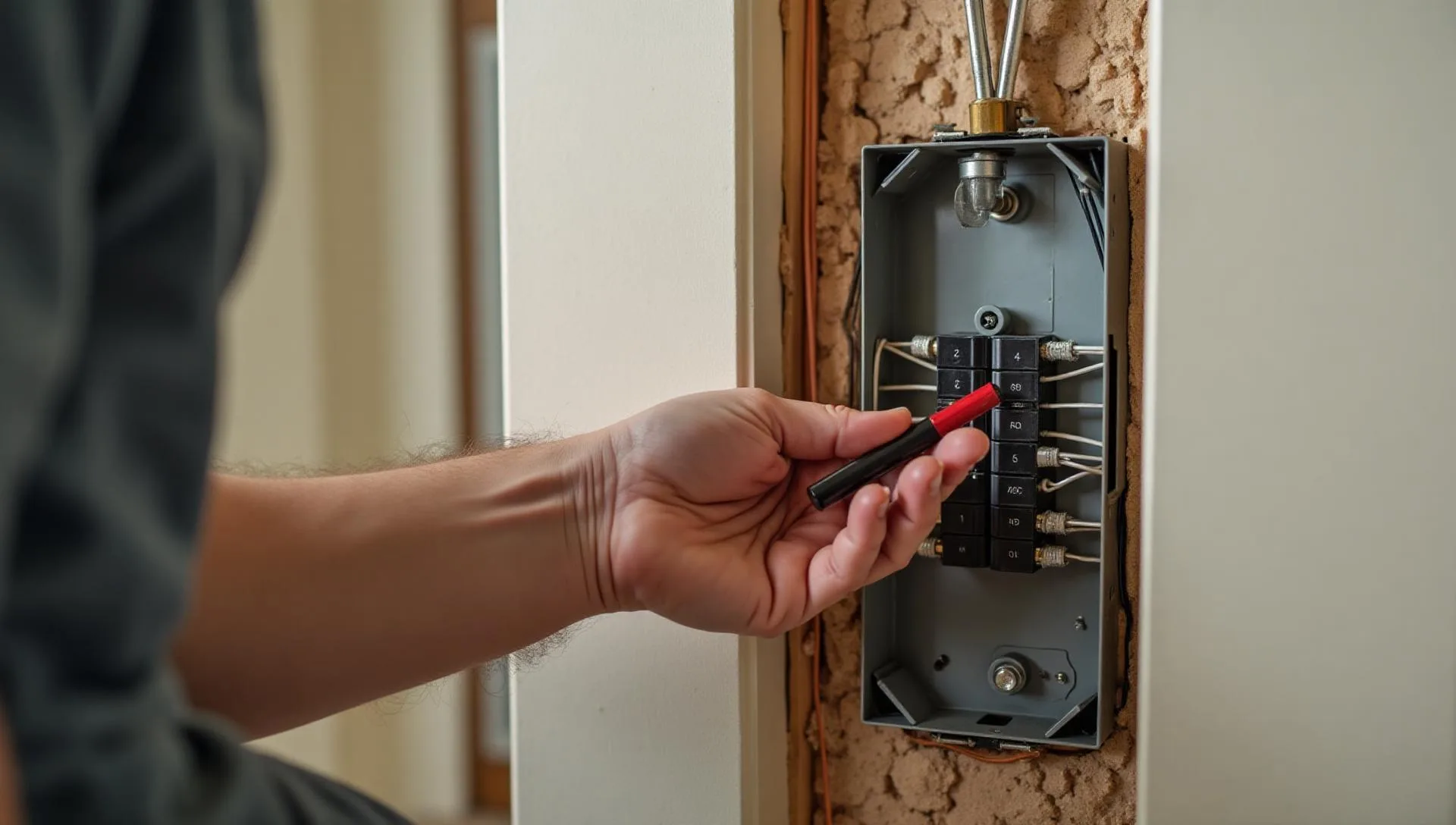
Home Rewiring in Naperville & Western Chicagoland
Knob-and-tube replacement, aluminum wiring remediation, and whole-house rewires — done by licensed electricians who live and work here. Illinois EC License #062-012345, fully insured, insurance-ready certification provided.
When Old Wiring Becomes a Real Problem
Most homes in Western Chicagoland built before 1950 were wired with knob-and-tube. Most homes built between 1965 and 1975 have aluminum branch circuits. Both systems worked well for their era, but neither was designed for the electrical demand of a modern household — the HVAC, EV charger, home office, kitchen loads, and dozens of always-on devices that didn't exist when the walls were originally opened up.
The failures aren't usually dramatic. It's warm outlets. It's a breaker that trips every time the microwave and coffee maker run together. It's a light that dims when the furnace kicks on. And increasingly, it's an insurance underwriter deciding they don't want the risk anymore. Rewiring an older home solves all of those at once, and — done properly — it does it without tearing the house apart.
What We Rewire
Whole-House Rewires
Full replacement of branch-circuit wiring, panel work as needed, updated grounding, GFCI/AFCI protection where code requires, and a modern breaker layout that reflects how you actually use the house.
Knob-and-Tube Replacement
Room-by-room or whole-house removal of active knob-and-tube circuits, replaced with grounded copper wiring, inspected and certified for insurance reinstatement.
Aluminum Wiring Remediation
Either full copper rewire or professionally installed COPALUM/AlumiConn connectors at every device. We recommend what's genuinely cost-effective for your home, not what has the biggest invoice.
Partial Rewires
Targeted rewires for kitchens, baths, additions, or a single problem circuit. Common alongside remodels and code-compliance work.
Grounding Upgrades
Adding a proper equipment ground to two-prong-outlet homes, updating water-pipe bonds, and correcting bootleg grounds found during inspection.
Panel Coordination
When the rewire pairs with a service upgrade, we handle the panel change and ComEd coordination as one project instead of two.
How a Rewire Actually Runs
- 1
Home Assessment
We walk the house — basement, attic, panel, and every room — to see what's actually in the walls and score the scope honestly.
- 2
Written Scope & Quote
A fixed-price quote itemizing what's being replaced, expected patch count, permit costs, and timeline. No 'we'll see when we open the walls' surprises.
- 3
Permits & Scheduling
We pull the electrical permit, coordinate ComEd, and schedule the crew. You get a per-day plan showing which rooms are active.
- 4
Room-by-Room Rewire
Wire is fished through existing cavities from basement and attic access, with strategic drywall openings near boxes. Power is restored to livable areas at end of day.
- 5
Inspection & Certification
County inspector signs off, we hand over the inspection card and a written certification letter suitable for your insurance carrier.
Why Choose Peak Power Systems
- Illinois EC License #062-012345 — every job permitted and inspected
- Over 25 years rewiring older homes in Western Chicagoland
- Insurance-ready written certification on our letterhead
- Honest scoping — partial when partial is the right answer
- Minimal wall damage, patch counts scoped up front
- ComEd coordination and permit handling included
- Fixed-price quotes, no change-order surprises
- Same crew from assessment through final inspection
Frequently Asked Questions
How do I know if my home needs to be rewired?
Common signs include two-prong outlets throughout the house, a fuse box instead of a breaker panel, cloth-jacketed wiring visible in the basement or attic, aluminum branch-circuit wiring (common in homes built 1965–1975), warm outlets or switch plates, flickering lights when large appliances start, and frequent breaker trips. If your insurance carrier is threatening non-renewal because of knob-and-tube or aluminum wiring, that's a definitive answer.
What's wrong with knob-and-tube wiring?
Knob-and-tube itself, when undisturbed and in good condition, isn't inherently dangerous — but it has no ground conductor, can't safely be buried in insulation, degrades where connections were made over the decades, and is often overloaded by modern electrical demand. Most insurance carriers in Illinois either surcharge or refuse to cover homes with active knob-and-tube. Replacing it protects the home and preserves insurability.
What's the concern with aluminum branch wiring?
Aluminum expands and contracts more than copper, oxidizes at connections, and was installed with devices not rated for it in many 1965–1975 homes. The result is loose connections that heat up and become a documented fire risk. Remediation is either a full copper rewire or, at minimum, professionally installed COPALUM or AlumiConn connectors at every device — we do both, and will tell you honestly which is more cost-effective for your home.
Do you do partial rewires or only whole-house?
Both. A whole-house rewire is the right answer when the existing wiring is systematically failing or the insurance carrier is done with it. Partial rewires make sense when a single circuit is dedicated to a heavy load, when a kitchen or bath remodel is being brought up to current code, or when knob-and-tube exists only in one section of the house. We'll scope the job to what actually needs doing.
Do I have to move out during a rewire?
Usually not. Whole-house rewires typically run 5–10 working days depending on square footage and finish type. We work room-by-room, restore power to livable areas at the end of each day, and coordinate with you on which rooms are active. Homeowners stay in the house for the vast majority of jobs. Full occupancy is disrupted only for the ComEd disconnect/reconnect windows.
How much wall damage is involved?
Less than most homeowners fear. Experienced electricians fish new wire through existing wall cavities from the basement, attic, and small access holes near outlet and switch boxes. Some drywall patching is unavoidable, but we scope the patch count in advance and can coordinate with a drywall/paint sub if you want a single point of contact for the full restoration.
Will you handle the permits and inspection?
Yes. Every home rewire requires an electrical permit and inspection in DuPage County and every jurisdiction we serve. We pull the permit, coordinate ComEd for any service work, meet the inspector, and provide the final signed inspection paperwork — which is what your insurance carrier will want to see.
Can you certify the wiring for my insurance company?
Yes. After a rewire (or after a full inspection of an existing system), we provide written certification on our letterhead, along with the signed county inspection card. That combination is what Illinois insurance carriers ask for when reinstating or issuing a new policy on an older home.
Related Services
A rewire often pairs with an electrical panel upgrade to bring the whole system up to a modern standard, and it's a good time to plan for an EV charger before the walls close back up.
Related Services
Complete your backup power system with these complementary services
Ready to Protect Your Home?
Free Generator Quote • Authorized Generac Dealer • 24/7 Emergency Service