
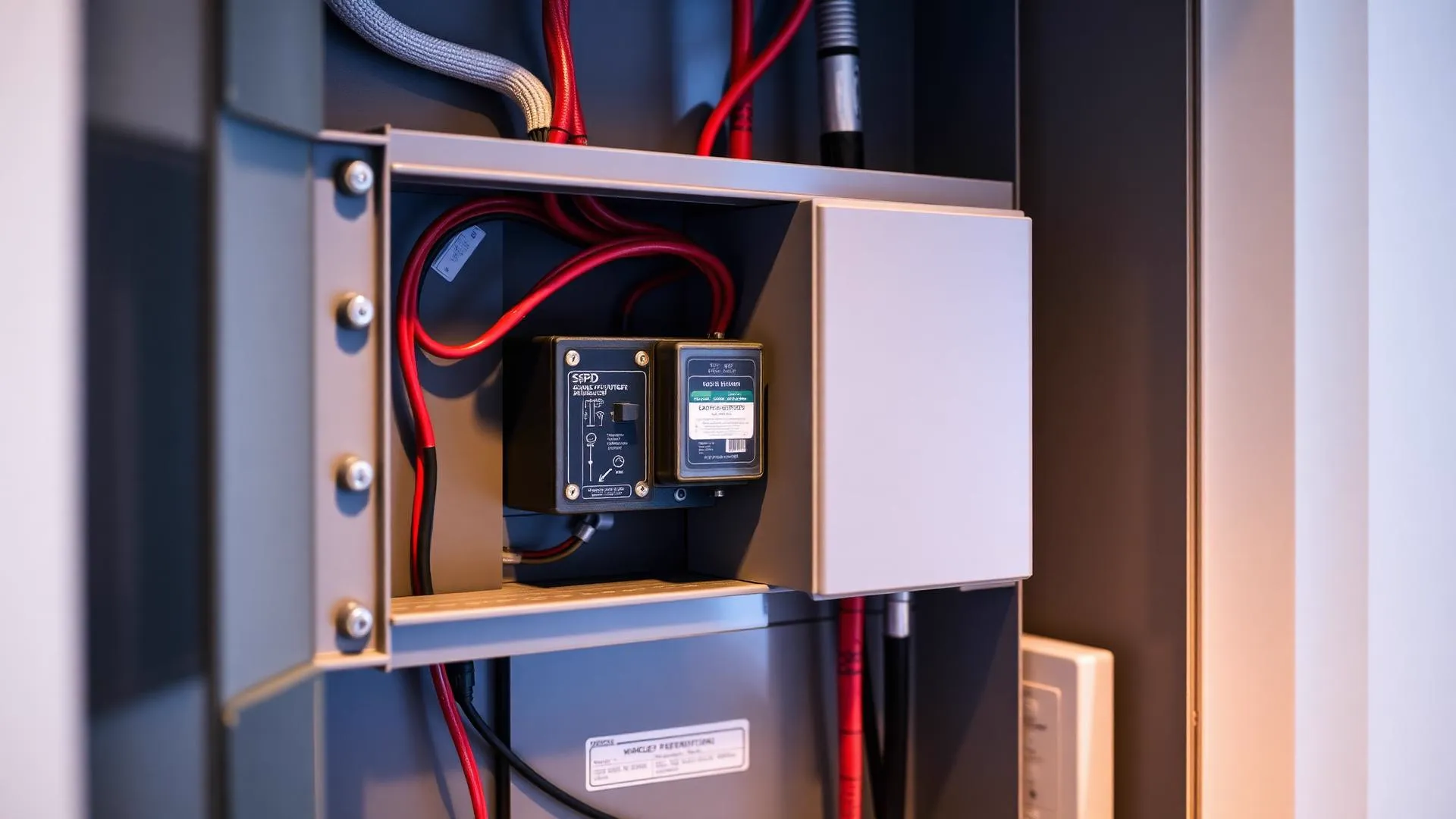
Whole-Home Surge Protection in Western Chicagoland
Type 1 and Type 2 surge protective devices installed at your panel by licensed Illinois electricians. Protects modern electronics, HVAC control boards, appliance mainboards, and generator transfer-switch controls from utility switching, grid faults, lightning, and internal load transients. Illinois EC License #062-012345.
Why This Matters More Than It Used To
Twenty years ago, the electronics inside a house were a TV, a VCR, and a microwave. Today, every furnace has a control board, every refrigerator has a mainboard, every dishwasher has a touch interface, every LED fixture has a driver, and every garage-door opener, thermostat, and doorbell has silicon in it. All of that silicon is vulnerable to voltage transients that pre-2005 appliances would have absorbed without noticing. That's why whole-home surge protection has moved from "nice to have" to a line item on the National Electrical Code — since NEC 2020, any new or replaced residential service panel requires a Type 1 or Type 2 SPD.
A whole-home SPD is a small device that mounts inside or beside your service panel and clamps voltage transients before they reach your branch circuits. It does one job and does it fast — measured in nanoseconds — and it does that job silently and continuously for years. It is one of the highest-value electrical additions a Western Chicagoland home can make, and it is almost always cheaper than the first appliance mainboard it saves.
What Actually Causes the Surges
Utility Switching
ComEd operates capacitor banks and reclosers dozens of times a day. Every switching event sends a transient down the line. Most are small; occasionally one is not.
Grid Faults & Reclosings
A branch fault trips and the line re-energizes seconds later. That handoff pushes a spike through every service on the same feeder — including yours.
Nearby Lightning
A strike a quarter-mile away induces energy on the utility drop. The transient rides that copper straight into your panel — no direct hit required.
Internal Motor Loads
Your own well pump, AC compressor, and fridge cycling on and off generate transients. A whole-home SPD clamps these before they reach sensitive circuits.
Downed-Line Reconnects
After a storm, crews re-energize sections of the grid. The moment power comes back is one of the most surge-heavy events your house sees all year.
Transfer-Switch Handoff
Every generator transfer — utility-to-gen and gen-to-utility — is a switching event. An SPD downstream of the switch protects electronics through both transitions.
Type 1 vs. Type 2 vs. Point-of-Use
All three are useful, and they don't compete — they layer. Understanding which layer you're buying tells you what you're getting.
Type 1 — line side of the main breaker
Type 1 SPDs install between the utility meter and the main breaker. They are rated to handle the largest transients, including energy diverted from the utility drop after a strike further up the line. Type 1 installs typically require a ComEd disconnect coordination and are the right choice for homes with overhead service in areas with frequent lightning or where the panel doesn't have room for an internal SPD.
Type 2 — load side of the main breaker
Type 2 SPDs mount inside the service panel, typically on a two-pole breaker or a dedicated bus stab. This is the standard whole-home layer for most Western Chicagoland residences: high performance, straightforward install, no utility coordination required. Since NEC 2020, any new or replaced residential panel needs a Type 1 or Type 2 SPD — and Type 2 is what most of them get.
Type 3 — point-of-use
The plug strip behind your TV or the outlet SPD in your home office is Type 3. It clamps the small residual transients that make it past the panel and — crucially — it protects the low-joule threshold electronics that live near it. Type 3 is what you add on top of a Type 2 panel-mount SPD, not instead of one.
What We Install and How
- 1
1. Panel Assessment
We open the panel, verify brand and available breaker positions, check bonding and the grounding electrode, and confirm the service is compatible with the SPD you're considering.
- 2
2. Device Selection
For most residences we specify a Type 2 SPD with a per-phase surge current rating of 40–80 kA, an audible/visual status indicator, and a manufacturer warranty on the device itself plus a limited connected-equipment warranty.
- 3
3. Permit & Install
We pull the permit in your jurisdiction, install the SPD on a dedicated breaker (or replace the existing dead-front punch-out for a lug-connect device), and torque all connections to spec.
- 4
4. Verify & Document
We test the status indicator, confirm the ground path, photograph the install, hand over the manufacturer paperwork, and schedule the SPD status check into your annual electrical or generator maintenance.
Signs Your SPD Is Worn Out (or You Don't Have One)
- Status LED on the panel-mount SPD is red or dark — the device has reached end of life and needs replacement.
- You've replaced two or more appliance control boards in the last five years with no obvious cause.
- Your neighborhood is on a feeder that trips and reclosers repeatedly during summer storm season.
- You have a whole-house standby generator but no SPD downstream of the transfer switch.
- Your panel was replaced before 2020 and no whole-home SPD was ever installed.
- You use sensitive electronics — home office, medical equipment, high-end AV — on unprotected circuits.
Why Peak Power Systems
- Illinois EC License #062-012345
- Over 25 years serving Western Chicagoland
- All permits pulled, all connections torqued to spec
- SPD status verified on every recurring maintenance visit
- Fixed-price quotes after a real panel walk
- Coordinated with generator, panel-upgrade, and rewire work when appropriate
Frequently Asked Questions
What actually causes a surge — is it just lightning?
Lightning is the dramatic case, but the majority of the surges hitting a Western Chicagoland home never make the news. Utility switching on the ComEd grid, capacitor-bank operations, faults on a neighboring circuit, downed lines re-energizing, and large motor loads inside your own house (well pumps, HVAC compressors, refrigerators cycling) all send voltage transients through the panel. A modern home takes dozens of these events every year. Most are small enough that individual electronics shrug them off; the occasional bigger one is what quietly kills a TV, a garage-door opener, or the control board on a furnace.
What's the difference between Type 1, Type 2, and point-of-use protection?
Type 1 SPDs are rated for installation on the line side of the main breaker — between the meter and the panel. They handle the largest transients, including direct-strike energy diverted from the utility drop. Type 2 SPDs mount on the load side of the main breaker inside the panel and are the standard whole-home layer for most homes. Point-of-use protectors — the strip under your desk, the outlet behind the TV — are Type 3, and they clamp the smaller residual transients that get past the panel. Real protection is layered: Type 1 or Type 2 at the panel plus Type 3 at sensitive electronics.
What is a joule rating and how big should mine be?
Joules measure how much surge energy the device can absorb before its internal components degrade. A larger joule rating means more headroom and a longer service life. For a residential Type 2 panel-mount SPD, look at the surge current rating (kA) at least as much as the joule number — 40 kA per phase is a reasonable minimum for a suburban home; 80 kA or more is worth the small upcharge in areas with frequent utility switching or exposed overhead service.
How long does an SPD last, and how do I know when it's worn out?
An SPD sacrifices a little of its capacity every time it clamps a surge. Most quality units last 5–10 years in a typical residential environment, less in areas with heavy lightning or dirty utility power. Every reputable panel-mount SPD ships with a status indicator — usually a green/red LED or a visible flag. Green means the device is still protecting; red or off means it has reached end of life and should be replaced. We check the indicator on every maintenance visit.
Will a surge protector protect against a direct lightning strike?
No SPD can absorb the full energy of a direct strike on the house itself — that requires a lightning-protection system with rods, down conductors, and a low-impedance ground. What Type 1 and Type 2 SPDs do very well is protect against the far more common case: strikes to the utility line a few hundred yards away, or to a neighbor's service, that arrive at your panel through the incoming conductors. That's the transient that destroys electronics inside houses that were never actually hit.
Do I still need surge protection if I have a standby generator?
Yes — arguably more so. A generator solves the outage; it does not clamp transients. Two of the most damaging surge events a home sees are (1) the moment utility power is restored after an outage, when the grid comes back hot and dirty, and (2) the transfer-switch handoff itself, especially on older manual switches. A Type 2 SPD downstream of the transfer switch protects the electronics that just rode through the outage on generator power. Pair the two: the generator keeps the lights on, the SPD keeps what's plugged in from being destroyed when the grid comes back. See our <a href='/services/generator-installation'>generator installation</a> page for how we specify SPDs alongside standby units.
What drives the cost of a whole-home surge protection installation?
The main variables are SPD type (Type 2 panel-mount vs Type 1 line-side, which needs ComEd disconnect coordination), whether the panel has a spare two-pole breaker slot or requires a new one, panel brand and any bonding/grounding work needed to make the SPD actually effective, and permit fees by jurisdiction. We quote fixed price after confirming panel brand, available breaker space, and grounding condition on the initial visit.
Can I install it myself?
The SPDs sold at big-box stores are physically installable in a couple of minutes, but the work is inside the service panel and, in Illinois, requires a licensed electrician on any home that isn't owner-occupied and a permit in every DuPage jurisdiction we work in. More practically: an SPD only works if the panel's grounding and bonding are correct, and that's exactly the kind of thing a licensed installer checks before mounting the device. An SPD tied to a compromised ground is worth nothing.
Related Services
Complete your backup power system with these complementary services
A standby generator and a surge protective device solve two different halves of the same problem — the generator keeps the power on, the SPD keeps what's plugged in from being destroyed when it comes back. See generator installation and winter storm protection for the full backup-power picture.
Ready to Protect Your Home?
Free Generator Quote • Authorized Generac Dealer • 24/7 Emergency Service