
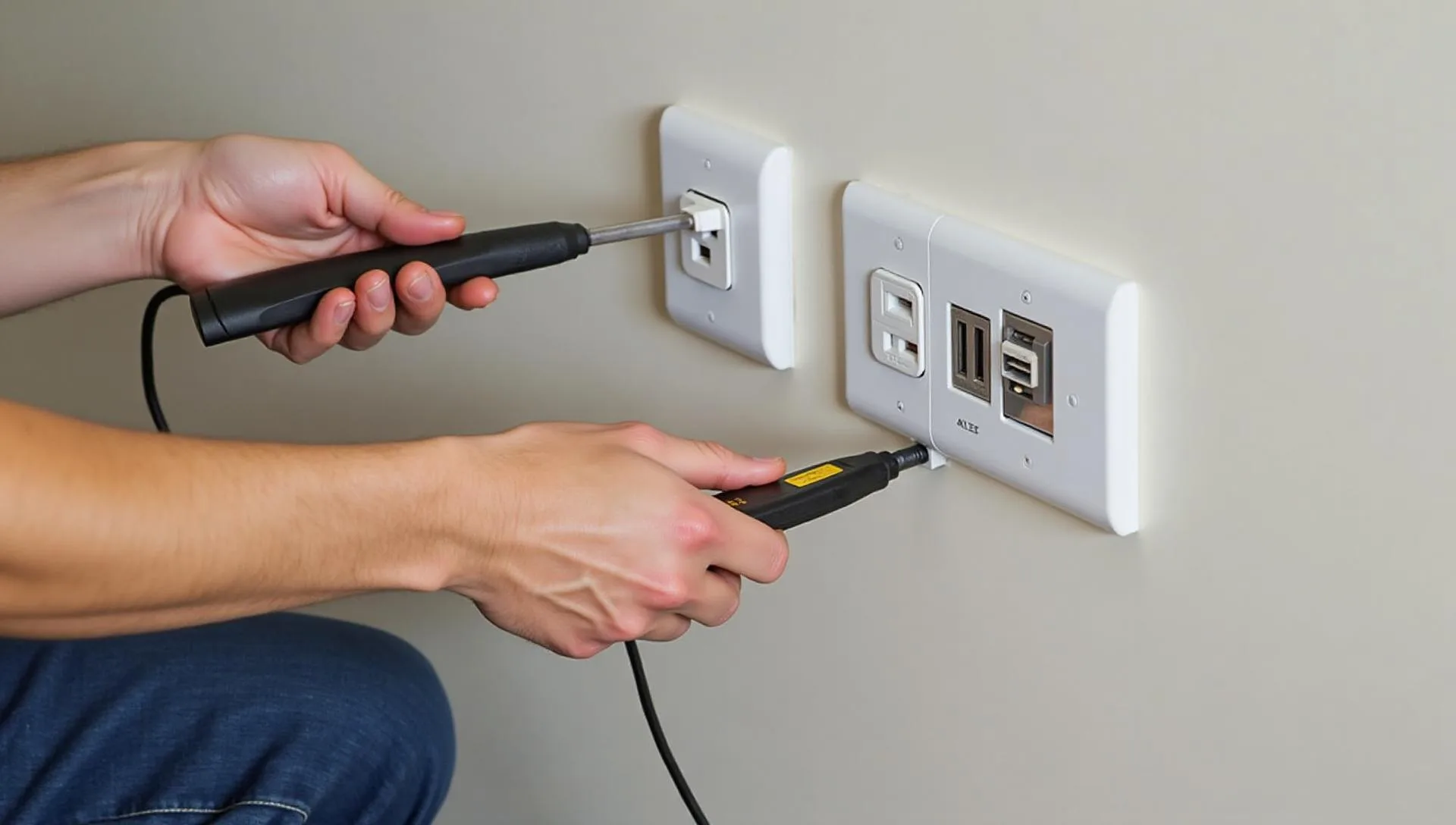
Outlet & Switch Installation in Western Chicagoland
New outlets and circuits, GFCI and AFCI protection, USB and smart devices, dimmers, exterior weatherproof receptacles, and dead-outlet troubleshooting. Illinois EC License #062-012345, fully insured.
Small Job, Real Consequences
Outlets and switches are the electrical work homeowners see and touch every day — and the work most likely to be done poorly. Loose backstab connections, missing GFCI protection in wet locations, ungrounded receptacles hidden behind three-prong faces, aluminum branch wiring joined to copper without the right connectors — none of these look like problems from the front of the wall, and all of them show up in insurance claims and inspection reports.
Peak Power Systems does device work the same way we do panels and generators: to code, permitted where required, and inspected. A licensed electrician on site, a written scope before we start, and a system that behaves the way you'd expect long after we leave.
What We Install
New Outlets & Circuits
Add receptacles where you actually need them — kitchen counters, home offices, garage workbenches, media walls — with dedicated circuits sized to the load.
GFCI & AFCI Protection
Bring older circuits up to current code with dual-function receptacles or dual-function breakers in kitchens, baths, bedrooms, and outdoor locations.
USB & Smart Outlets
USB-A/USB-C receptacles at nightstands and desks; Wi-Fi and Matter-compatible smart outlets where a neutral is present in the box.
Dimmers & Smart Switches
LED-compatible dimmers, motion sensors, timers, and full-featured smart switches — including 3-way and 4-way configurations.
Exterior Weatherproof Outlets
WR-rated receptacles with in-use covers for patios, holiday lighting, pool pumps, garden shops, and Level 1 EV charging.
Dead-Outlet Troubleshooting
Systematic diagnosis to find the failed device, loose connection, or tripped GFCI causing the problem — and a clean repair, not a workaround.
How the Work Runs
- 1
Scope Walk & Fixed Quote
We look at the panel, the target locations, and the wall/ceiling paths. You get a written fixed-price quote per device or per circuit.
- 2
Permit If Required
New circuits and altered branch wiring get a DuPage County (or applicable) electrical permit. Simple device swaps do not. We tell you which category your job falls into.
- 3
Clean Installation
Drop cloths down, dust controlled, boxes cut with proper technique for drywall repair minimization. Every new device tested at install.
- 4
Inspection & Handoff
Where a permit was pulled, we meet the inspector. Otherwise we hand you a device map and any GFCI reset locations you'll want to know.
Why Homeowners Call Us for Small Electrical Work
- Illinois EC License #062-012345 — every outlet and switch to current NEC
- Over 25 years of residential wiring in Western Chicagoland
- Flat diagnostic fee on dead-outlet calls, credited toward the repair
- Dual-function AFCI/GFCI installed by default on new living-space circuits
- Backstab connections replaced with side-screw or lever connectors
- Aluminum-to-copper joints made with COPALUM or AlumiConn — never twist-on caps
- Written fixed-price quotes; no per-hour surprises
- Small-job minimum designed so a single outlet is still worth calling for
Frequently Asked Questions
Can I add an outlet myself instead of calling an electrician?
In Illinois, permanent branch-circuit work on a home you don't own outright requires a licensed electrician, and even on your own home, extending or adding a circuit is a permitted electrical alteration in DuPage County and every jurisdiction we serve. Beyond the legal question, a mis-wired outlet is one of the most common sources of house fires and shock hazards. Adding a receptacle to an existing box is usually a small job when done right — it's not worth the risk to DIY.
What's the difference between GFCI and AFCI protection?
A GFCI (ground-fault circuit interrupter) trips when current leaks to ground — the classic case is a hairdryer falling in the sink. Code requires GFCI protection in kitchens, bathrooms, laundry rooms, garages, unfinished basements, and all outdoor locations. An AFCI (arc-fault circuit interrupter) trips when it detects the electrical signature of arcing — the loose or damaged wiring that starts fires inside walls. Code requires AFCI protection in most habitable rooms. Modern breakers combine both (dual-function AFCI/GFCI), and we install those on any circuit we touch in a living space.
My outlet is dead but the breaker isn't tripped. What's wrong?
The most common cause is a tripped GFCI upstream — one GFCI receptacle often protects several downstream outlets, and pressing 'reset' on the upstream device restores them all. Other causes include a loose backstab connection at another outlet on the same circuit (very common in homes built in the 1970s and 80s), a failed receptacle, or a broken neutral. We troubleshoot dead outlets on a flat diagnostic fee that gets credited toward the repair.
Can you install USB outlets and smart outlets?
Yes. USB-A and USB-C receptacles are a straightforward direct replacement for standard outlets and are especially popular in bedrooms, home offices, and kitchen counters. Smart outlets (Wi-Fi, Matter, Z-Wave) work best when the neutral wire is present in the box — most homes built after 1985 have this. We check for a neutral before quoting and can recommend a smart switch or in-line module if one isn't available.
Do exterior outlets need anything special?
Yes. Any receptacle outdoors must be GFCI-protected, mounted in a weather-resistant (WR-rated) receptacle, and covered by an in-use (bubble) cover that keeps the outlet weatherproof even while a cord is plugged in. Circuits going outside also need the right conductor rating and, for permanent installations off a detached structure, may require conduit and burial-depth compliance. We handle the whole install — trench, wire, box, cover, and inspection.
Can you add a switch to an outlet that's always on?
In most cases yes. Depending on how the circuit is wired, we can either add a wall switch that controls the receptacle, split the receptacle so half is switched (typical for lamps) and half is always hot, or install a wireless smart switch that pairs with a smart outlet — useful when running new switch-leg wiring would mean opening drywall.
How long does a typical outlet or switch job take?
A single receptacle or switch replacement in an accessible location is usually 20–40 minutes. Adding a new circuit that requires running wire through walls and installing a new breaker typically runs 2–4 hours. Whole-room re-devices with GFCI/AFCI upgrades and a few new locations usually finish in a day. We quote a fixed price per scope after a quick site walk.
Related Reading
Older Western Chicagoland homes often show a pattern: dead outlets on one circuit, a warm cover plate on another, a GFCI that won't reset. That's usually a wiring-condition problem, not a device problem — see our home rewiring page for what a whole-house assessment looks like, or our electrical inspection page if you want a report before deciding what to do.
Related Services
Complete your backup power system with these complementary services
Ready to Protect Your Home?
Free Generator Quote • Authorized Generac Dealer • 24/7 Emergency Service