
Hot Tub & Spa Wiring in Western Chicagoland
Dedicated 240V GFCI circuits, code-compliant disconnects, correct conductor sizing, bonding, permits, and inspection — coordinated with your spa dealer so the electrical is ready the day the tub is delivered. Illinois EC License #062-012345, fully insured.
A Scope Worth Getting Right the First Time
A hot tub is a small appliance with a large electrical footprint. It combines high current, water, and people, and NEC Article 680 exists specifically to address that combination. The code is not complicated, but it is specific: dedicated 240-volt circuit, GFCI protection on the full feeder, a lockable disconnect within sight of the spa and at least 5 feet from the water's edge, correct conductor gauge for the amperage and run distance, and bonding of every conductive metal component around the tub — including the water itself through a manufacturer-provided bond point.
None of this is exotic; all of it is checked by the inspector. And every element of it matters if the day ever comes that a fault develops inside the spa's equipment pack. When someone is standing barefoot on a wet deck or sitting in the water, the GFCI, the disconnect location, and the bonding are what stand between a normal Tuesday and a call to 911. We treat spa wiring as the code treats it — as a scope that has to be right the first time.
What's Included in a Standard Install
Dedicated 240V Circuit
Sized per the spa manufacturer's manual — typically 40 or 50 amps. No sharing with other loads, no piggybacking on an existing circuit.
GFCI Protection
Either a GFCI breaker in the service panel or a GFCI-equipped disconnect at the spa, per the manufacturer's requirement. Tested at final.
Code-Compliant Disconnect
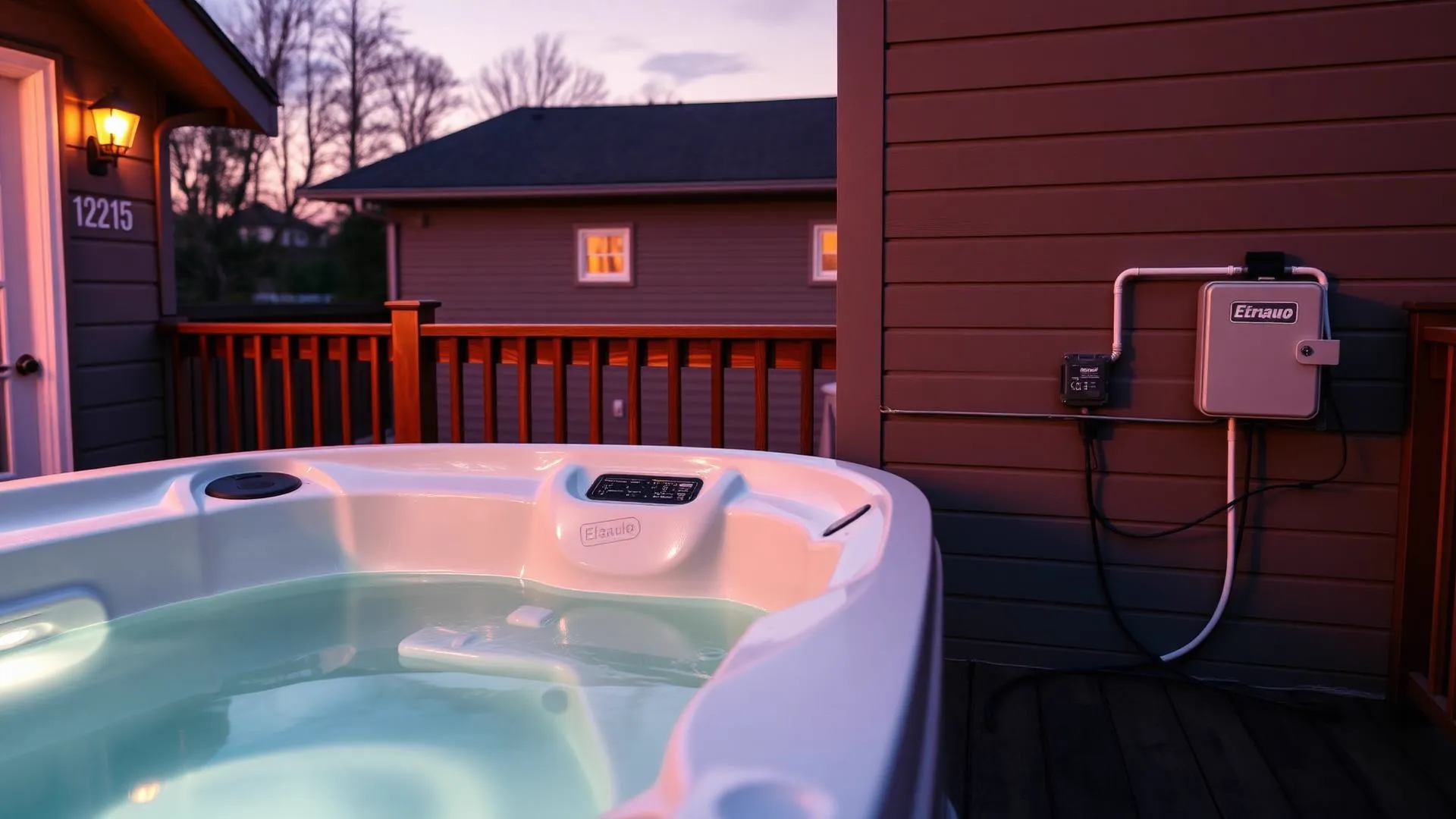
Weatherproof, lockable, within sight of the spa and at least 5 feet horizontally from the water. Mounted on the house wall or a dedicated post.
Correct Conductor Sizing
Wire gauge calculated for the specific run length to keep voltage drop under 3% — not defaulted to a generic size.
Bonding
Bonding jumper to the spa's bond lug per NEC 680, plus any bonding required to nearby metal railings, ladders, or reinforcing steel in the pad.
Permit & Inspection
Electrical permit pulled in your jurisdiction, install to NEC 680, inspection coordinated. Documentation handed over at close-out.
How We Coordinate with Your Spa Installer
- 1
1. Pre-Install Walkthrough
We meet on site with the spa dealer's specs. We confirm pad/deck location, panel capacity, disconnect mounting location, and route from panel to spa.
- 2
2. Electrical Rough
Before the spa is delivered: circuit run from panel to disconnect location, disconnect mounted, conduit stubbed out to where the spa will sit, bonding conductor pulled.
- 3
3. Spa Delivered & Set
Your dealer sets the spa on the pad. We're on site or immediately available. If bonding needs to tie to reinforcing steel or a nearby handrail, we finish that now.
- 4
4. Electrical Final
Spa's flexible whip connected to the disconnect, bonding jumper tied to the spa's bond lug, GFCI tested, permit inspection scheduled. You fill the tub.
Common Site Conditions We Handle
- Deck-mounted spas with short runs from the house
- Ground-level pad spas 60–120 feet from the service panel
- Trenched underground conduit runs to detached patios
- Panels without a spare 50-amp double-pole slot (we add a sub-panel or reconfigure)
- Older panels that need bonding or grounding remediation before the spa circuit lands
- Backyard scopes that combine a spa circuit with landscape lighting, an outbuilding, or an EV charger — sized as one project
What We Do Not Do
We do not connect a hot tub circuit without a permit. We do not undersize conductors to hit a lower quote. We do not skip the bonding step because the tub is on a wooden deck with no metal in sight — the water itself is the bond that matters. We do not connect a spa to an existing 240V circuit that's already serving another load. And we don't leave GFCI testing off the punch-list. The reason to hire a licensed installer for this scope is that all of the above happen when you don't.
Why Peak Power Systems
- Illinois EC License #062-012345, fully insured
- 25+ years serving Western Chicagoland — DuPage, Will, Kane, Kendall counties
- Direct coordination with your spa dealer to keep delivery day on schedule
- All permits pulled and inspections coordinated
- Fixed-price quotes after seeing the panel and the spa location
- NEC 680 done to the letter — bonding, disconnect placement, GFCI, and voltage-drop math
Frequently Asked Questions
What kind of circuit does a hot tub need?
The overwhelming majority of full-size residential hot tubs and swim spas require a dedicated 240-volt circuit, typically 40 or 50 amps, with GFCI protection. A handful of small plug-and-play spas run on a standard 120-volt/15-amp outlet, but those are the exception. The exact amperage, breaker size, and wire gauge come from the spa manufacturer's installation manual — we always work off that document rather than guessing from the model name, because two spas of the same brand can specify different circuits depending on heater and pump configuration.
Why does the disconnect have to be in a specific location?
The National Electrical Code (NEC 680) requires a lockable disconnecting means within sight of the spa but at least 5 feet horizontally from the water's edge (or separated from it by a permanent barrier). The point is simple: if someone in the spa gets in trouble, a bystander can shut off power immediately without reaching toward the water or running back to the panel. The 5-foot minimum keeps the disconnect out of the splash zone. In practice, this usually means mounting a weatherproof disconnect on the house wall or a nearby post, positioned so it's visible from the tub.
What about the GFCI — is it in the disconnect, the breaker, or the spa?
GFCI protection is required on the full 240V feeder to the spa, and it can be provided either by a GFCI breaker in the service panel or by a GFCI-equipped disconnect at the spa location. Both approaches are code-compliant; the difference is convenience. A GFCI in the disconnect is easier to reset at the tub if it trips, which happens occasionally with new spas until the plumbing settles. Some spa manufacturers explicitly require GFCI at the disconnect rather than at the panel — we follow the manual.
What wire size do I need?
It depends on the amperage and the length of the run. A 50-amp spa circuit typically uses #6 copper THHN in conduit for runs under 100 feet, stepping up to #4 for longer runs to keep voltage drop under 3%. A 40-amp circuit typically uses #8 copper THHN. We calculate the actual voltage drop based on the specific run distance from your panel to the disconnect location rather than defaulting to a generic gauge — a hot tub 120 feet from the panel that's undersized on wire will trip breakers, heat slowly, and shorten heater life.
What is 'bonding' and why does the spa need it?
Bonding is the practice of tying every conductive metal part around the spa — the equipment pack chassis, any metal railings or ladders, reinforcing steel in a concrete pad, and the water itself through a bond point on the spa — to a common bonding conductor. The purpose is to keep every metal surface at the same electrical potential so no voltage difference can develop between, for example, a metal handrail and the water. NEC 680 spells out the specific bonding requirements and every installation we do includes them. A permit inspector will check the bonding jumpers explicitly.
Do I need a permit for hot tub wiring?
Yes. Every jurisdiction we work in across DuPage, Will, Kane, and Kendall counties requires an electrical permit for the dedicated hot tub circuit, the disconnect, and the bonding. We pull the permit, do the install to NEC 680, and coordinate the electrical inspection. Cutting corners on the permit is a bad idea specifically here — the inspector's checklist for spas is short and focused, and code-noncompliant hot tub wiring is one of the fastest ways to end up on a homeowner's insurance denial letter after an incident.
How does the electrical scope coordinate with the spa delivery?
The best sequence is: (1) spa location finalized and pad or deck ready, (2) electrical rough — circuit run from panel to the disconnect location, disconnect mounted, bonding conductor stubbed out, (3) spa delivered and set on the pad, (4) electrical final — spa's flexible whip connected to the disconnect, bonding jumper tied to the spa's bond lug, GFCI tested, permit inspection. We coordinate directly with your spa dealer or delivery crew so the electrical is ready when the tub arrives and the final connection happens the same day the tub is set. This avoids the awkward gap where the tub is sitting on the pad, unusable, waiting for us.
What drives the cost of a hot tub wiring project?
The main variables are the length of the run from the panel to the disconnect (short interior runs are simplest; long trenched underground conduit runs to a detached pad are the most involved), whether your existing panel has a spare two-pole breaker slot or needs a sub-panel added to serve the spa plus other backyard loads, the amperage of the spa (most residential units are 50A; larger commercial-style units go higher), permit fees by jurisdiction, and any bonding or grounding work required to bring the surrounding deck and equipment up to NEC 680. We quote fixed price after seeing the panel and the spa location.
Related Services
Complete your backup power system with these complementary services
Adding a spa to a home that may also need panel capacity? See electrical panel upgrades — we can bundle the two into one permitted scope. Request a quote.
Ready to Protect Your Home?
Free Generator Quote • Authorized Generac Dealer • 24/7 Emergency Service